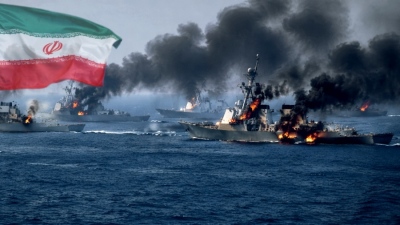
In a period of increasing war tension between the United States and Iran, the Straits of Hormuz are emerging not simply as a strategic passage, but as Tehran’s ultimate pressure tool.
The failed diplomatic efforts, the mediation moves of third countries such as Pakistan and the military preparation are creating an explosive mixture.
The analysis of developments shows that the conflict is not only military, it is deeply political, diplomatic and historical.
The Straits of Hormuz constitute the most important energy choke point in the world.
A huge percentage of global oil passes through there, a fact that makes it critical for the global economy.
Tehran has invested for decades in leveraging this advantage, transforming geography into strategic power.
Unlike traditional military powers, Iran does not rely on absolute superiority, but on the ability to make the cost of conflict unbearable.
According to analysis by the British newspaper The Independent, Iran maintains a strategic advantage in the region.
The main argument is simple but powerful, Hormuz cannot be easily opened by military force and this makes Tehran a dominant player.

The deadlock of the talks
The recent diplomatic contacts between the United States and Iran did not lead to substantial progress.
The reasons are deeper and relate to fundamental disagreements.
Tehran considers Washington’s stance “maximalist” while the United States considers the Iranian demands unacceptable
This mutual distrust makes any agreement extremely difficult.
Iran sets a reasonable condition for dialogue to restart, the naval blockade must be lifted.
However, the American side also does not appear to be in a hurry to restart the talks.
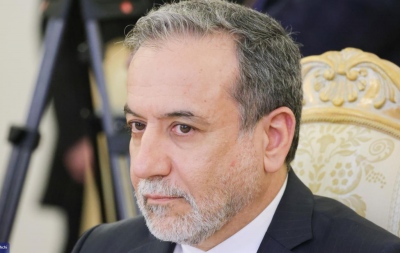
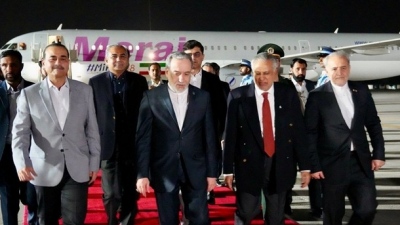
The Foreign Minister of Iran, Abbas Araghchi, carried out a diplomatic tour with an intermediate stop in Islamabad, returning from Oman.
There he is expected to continue contacts with Pakistan, which has assumed the role of mediator.
Despite the lack of progress, Pakistan insists that the process has not ended.
Diplomatic activity continues.
Delegations return to Iran for instructions, new rounds of discussions are expected while face to face talks remain suspended
The temporary lifting of security measures in Islamabad shows that the crisis has not escalated immediately but has not de-escalated either.

Araghchi (FM of Iran): US a source of instability for the Middle East
Araghchi, visited Muscat, where he met with the Sultan of Oman, Haitham bin Tariq Al Said.
The meeting took place during a period of heightened tensions, with the main subject being the security of navigation in Hormuz, a passage of vital importance for global energy trade.
Abbas Araghchi expressed Tehran’s appreciation for the role of Oman as a responsible mediator, emphasizing the importance of diplomacy in a period of intense geopolitical instability.
At the same time, he reiterated Iran’s willingness to maintain close relations with the countries of the southern Persian Gulf, promoting a model of regional cooperation without external interventions.
The Iranian side argued that the presence of military forces of the United States in the Middle East constitutes a factor of instability and division, calling for a more autonomous approach to security.

The “silent admission” in Washington
According to the analysis of John W.S. Clark, there is a critical reality known to the advisers of Donald Trump:
Reopening the Straits of Hormuz by military means is extremely difficult, almost impossible without enormous losses.
The reason is the nature of war at sea when:
1) The opponent controls the coasts
2) There are extensive minefields
3) Asymmetric tactics are used
The air superiority of the United States can destroy targets, but it is not enough to secure control of such a narrow and dangerous sea corridor.
Mine clearance, especially under hostile fire, is one of the most dangerous military operations.
And this is a cost that Washington does not appear willing to pay.

The historical lesson of the Dardanelles (1915)
To better understand the situation, the analysis makes a particularly apt historical comparison with the Gallipoli Campaign.
In March 1915, Britain and France attempted to open the Dardanelles, an equally strategic strait that had been closed by the then Ottoman Empire.
The forces involved were impressive, 14 large warships, modern battleships such as the Queen Elizabeth, a fleet of minesweepers and artillery support
The plan seemed flawless, the large ships would bombard the coasts, the minesweepers would clear the sea and the fleet would advance
However, reality was very different.
Within a few hours: Total destruction
On 18 March 1915, the operation began with optimism.
By midday everything seemed to be proceeding smoothly.
Then the French battleship Bouvet sank within a few minutes, the HMS Irresistible was hit by a mine, the HMS Inflexible suffered serious damage and the HMS Ocean sank
In less than seven hours three large warships were lost and one was put out of action
The operation was abandoned and the attempt to open the Dardanelles by sea was never repeated.
The message was clear, even superpowers can be defeated in narrow sea passages when the opponent is well prepared.

The modern application: Iran and Hormuz
The analysis of The Independent transfers this historical precedent to today’s reality.
Iran has invested for decades in a specific defense model:
1) Minefields at sea
They can be deployed quickly and paralyze navigation.
2) Coastal missiles
They allow strikes from land on passing ships.
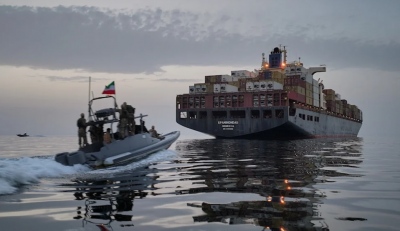
3) Fast boats of the Islamic Revolutionary Guard Corps
They are used for “swarm” attacks (swarm tactics).
4) Asymmetric warfare
Small, flexible units that exploit geography.
This combination creates an environment where even the most powerful navy in the world faces serious limitations.

Why the military solution is so difficult
The United States possesses the most powerful navy and air force globally.
However, Hormuz is not an open ocean.
The main problems are narrow width, about 33 km at the narrowest point, proximity to Iranian coasts, the ability for continuous renewal of mines and difficulty in protecting commercial ships
Even if the United States destroys infrastructure, Iran can continue to obstruct passage.
Iran’s strategic superiority
Contrary to the traditional perception of power, Iran does not need to “defeat” the United States militarily.
It is enough to delay or block navigation, increase the cost of conflict and create a global energy crisis
This gives it a powerful negotiating weapon.

The role of political leadership
The crisis in Hormuz is not only military, it is also political.
Within the United States there are different approaches, a more aggressive stance from politicians such as Marco Rubio, a more cautious stance from J. D. Vance
These differences reflect a broader dilemma, should the United States engage in yet another war in the Middle East?
Or avoid a high cost conflict with an uncertain outcome?

The straits of Hormuz as a “natural fortress”
The analysis concludes with a particularly strong conclusion:
The Straits of Hormuz function as a natural fortress.
It cannot be opened with bombardments, threats and limited military operations
Instead, it requires a political solution, negotiation and strategic patience.
Hormuz is not simply a geographical point, it is one of the most important levers of power in the modern world.
The history of the Dardanelles shows that even the strongest powers can fail when they underestimate the opponent and the battlefield.
Today, Iran has turned this geographical reality into a strategic advantage.
For the United States, the dilemma remains:
1) To attempt a dangerous military solution
2) Or to accept that in this field, power is not measured only in weapons, but also in geography, strategy and endurance
The only certainty is that Hormuz will continue to constitute the most critical “pressure point” between Washington and Tehran for the coming years.
www.bankingnews.gr




Σχόλια αναγνωστών